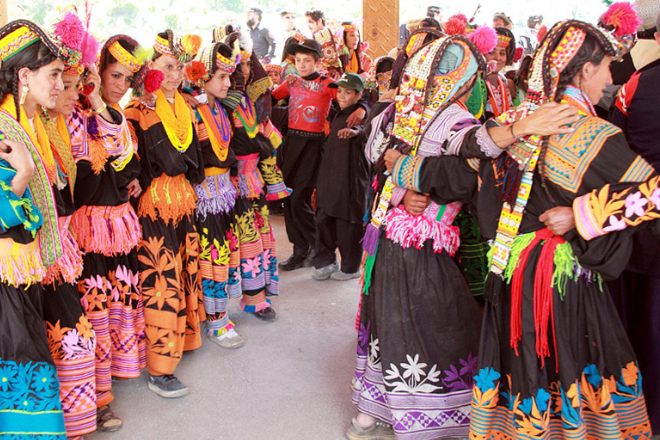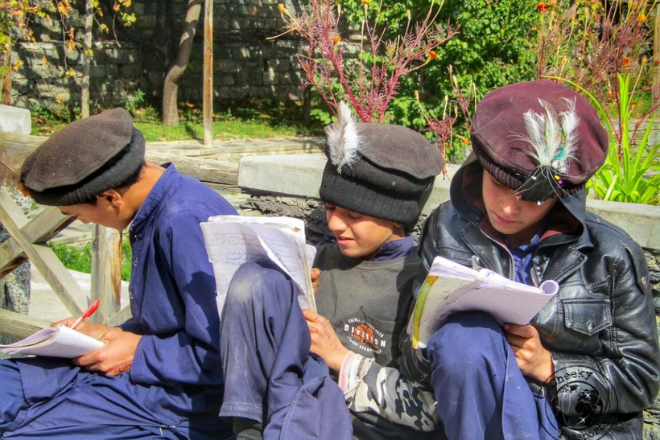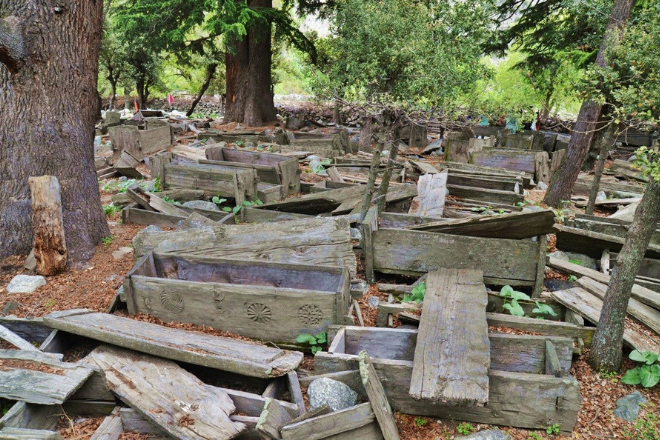
Kalash Valley is a collective name for three inhabited valleys in the Chitral region: Bumburet, Rumbur, and Birir. These valleys are home to the Kalash people, an indigenous community whose cultural practices, language, and social systems remain distinct within Pakistan.
Kalash Valley should not be understood as a tourist destination in the conventional sense. It is not a resort area, a heritage park, or a cultural showcase designed for visitors. It is a living cultural landscape, where agriculture, ritual, seasonal movement, and community governance continue to shape daily life.
Visitors often underestimate the Kalash Valley by focusing only on festivals or clothing. In reality, the valley’s significance lies in how culture is practiced every day, not only during celebrations. Travel here requires awareness, patience, and respect for boundaries.
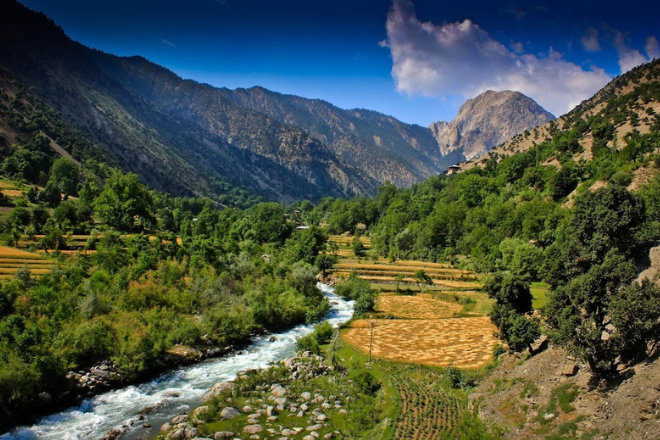
The Kalash people are native to the Chitral region and have maintained their cultural identity over centuries due largely to geographical isolation and strong internal social organization. Until relatively recent decades, access to the valleys was limited for much of the year, which reduced external influence.
Unlike many surrounding communities that gradually assimilated linguistically and culturally, the Kalash preserved their traditions through community-based rules, shared ritual calendars, and clear social norms. These systems are not symbolic; they actively govern marriage, festivals, seasonal movement, and social interaction.
Many popular online narratives attempt to assign dramatic or foreign origins to the Kalash people. Academic research treats these stories as cultural folklore, not verified history. Guide to Pakistan presents these narratives with care, acknowledging their place in community storytelling without presenting them as historical fact.
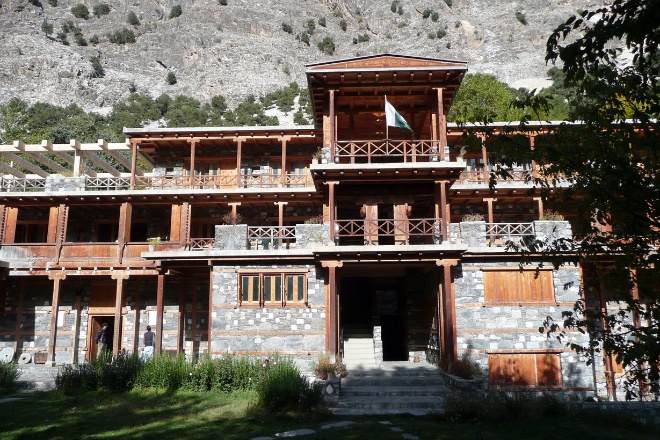
Bumburet is the largest and most accessible of the three valleys. It contains most of the region’s guesthouses and is often the first point of entry for visitors. Despite this, daily life here remains village-based, with agriculture and community events taking precedence over tourism.
Rumbur is narrower and more secluded. It has fewer accommodations and a stronger emphasis on communal living. Travelers often describe Rumbur as quieter and more reflective, with fewer outside distractions.
Birir is the smallest and least visited. Its pace is slower, and visitors often encounter everyday activities such as farming, food preparation, and social gatherings rather than events designed for outsiders.
Each valley shares the same cultural foundation, but their social rhythms differ, which is important for travelers to understand.
From City | Approx. Distance | Route Overview |
Islamabad | ~370–400 km | Islamabad → Dir → Lowari Tunnel → Chitral → Kalash Valleys |
Peshawar | ~390–420 km | Peshawar → Dir → Chitral → Kalash Valleys |
Lahore | ~740–770 km | Lahore → Islamabad → Dir → Chitral |
Karachi | ~1,400 km | Flight to Islamabad → road or flight to Chitral |
Important: Distances vary due to mountain roads and seasonal conditions. Travel times range from 10–14 hours by road from Islamabad.
The best time to visit Kalash Valley is June to August, when roads are open and community life is most visible.
Accommodation is simple and locally run:
Luxury accommodation does not exist in the valleys. Heating, electricity, and hot water may be limited. Staying here requires flexibility and respect for local norms.
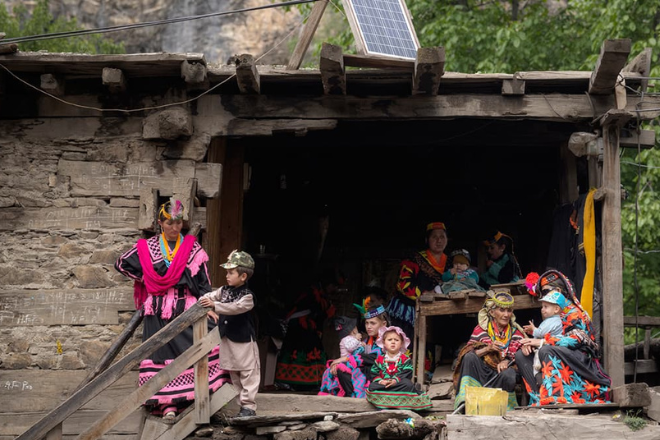
Observation is the most meaningful activity in Kalash Valley. This includes watching daily routines, understanding how communal spaces function, and noticing how rituals are integrated into normal life. Participation should only occur when explicitly invited.
Village paths connect homes, fields, and communal areas. Walking through these spaces allows visitors to understand scale, terrain, and social structure. Loud or disruptive behavior is discouraged.
Photography should be permission-based, especially when people are involved. Landscape photography is generally acceptable, but festivals and rituals may have restrictions.
Kalash Valley rewards travelers who slow down. Sitting quietly, listening to conversations, and observing interactions often provides more insight than movement.
Food in the Kalash Valley is home-based and seasonal, not restaurant-driven. Visitors usually eat meals prepared by host families or small local guesthouses, and these meals are shaped more by availability than by menus.
Corn or Wheat Bread with Stew: Flatbread made from corn or wheat flour is a daily staple. It is typically eaten with simple vegetable or lentil stews, cooked slowly and lightly seasoned. This is the most common full meal served to visitors staying overnight.
Rice with Vegetables or Pulses: Rice is prepared in a basic, nourishing style and served with lentils, beans, or seasonal vegetables. Meat may be added during festivals or special occasions, but is not part of daily meals.
Mutton or Goat Curry (Occasional): Meat-based meals are usually reserved for communal events, festivals, or when hosting guests. When served, mutton or goat meat is cooked plainly, without heavy spices, and shared as a communal dish.
Dairy-Based Meals: Milk, yogurt, butter, and local cheese are important parts of a healthy diet. Yogurt is often eaten alongside bread or rice-based meals and is especially common in summer.
Fish and Poultry: Unlike many upper Swat destinations, river trout is not a defining local meal in the Kalash Valley. Poultry may be present in some households, but it is not a regional specialty and should not be expected regularly.
Tea is consumed multiple times a day, usually without ceremony. It is often served with bread, dried fruit, or walnuts. Meals follow a practical rhythm, shaped by farming schedules, weather, and daylight rather than fixed dining times.
Kalash Valley is known for:
These are consumed locally and shared within extended families. Surplus produce may be traded in nearby markets, but large-scale export is not a defining feature of the valley.
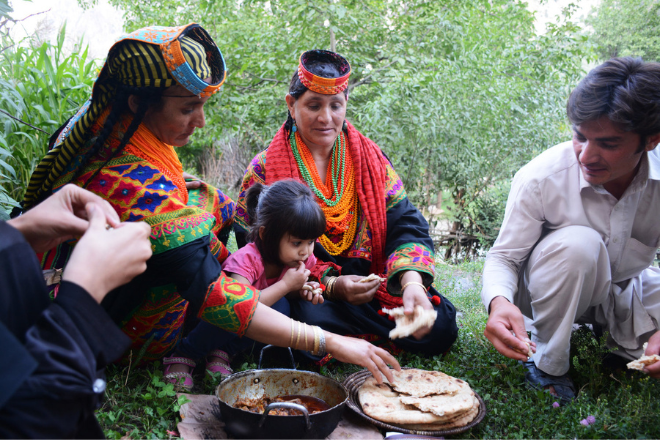
The Kalash follow an indigenous polytheistic belief system rooted in nature, seasons, and communal rituals. Religious life is inseparable from agriculture and seasonal change.
These events are sacred communal gatherings, not performances. Visitors should attend only with guidance and should not treat them as spectacles.
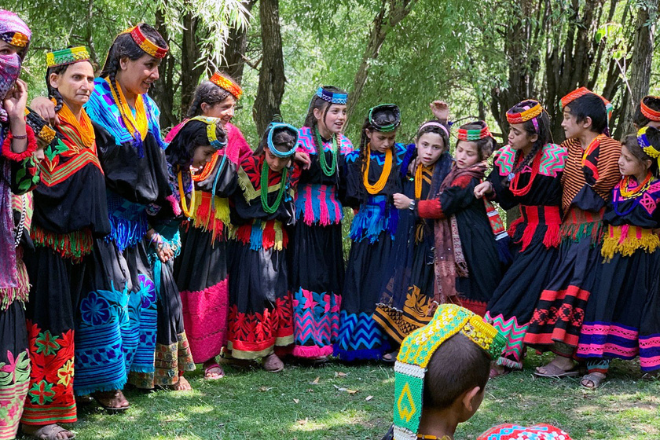
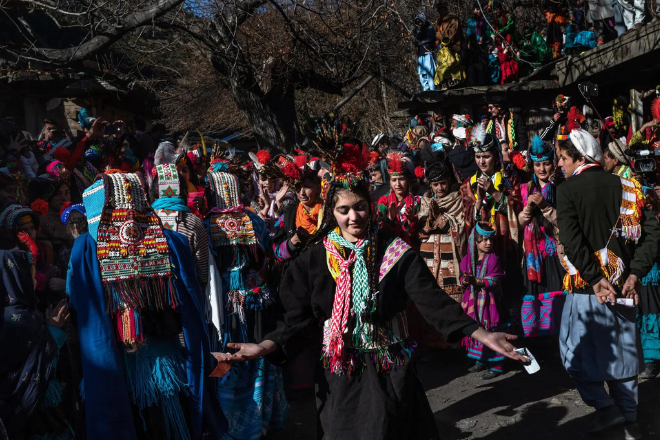
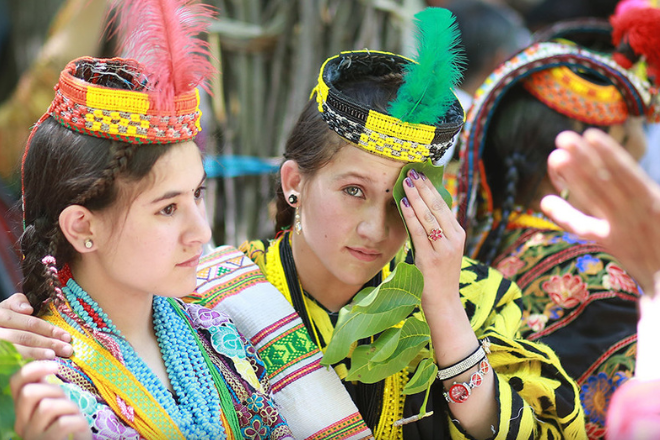
Traditional dress is worn daily and reflects age, role, and occasion. Clothing is not a costume. It is an expression of identity and belonging.
Kalash society operates through shared norms governing purity, community participation, and personal conduct. These norms are internal and should be respected without challenge or commentary by visitors.
Category | Species (Common Name) | Scientific Name | Where Found | Visibility |
Mammals | Markhor (protected) | Capra falconeri | Upper Chitral region | Rare |
Mammals | Himalayan ibex | Capra sibirica | High mountain slopes | Rare |
Mammals | Red fox | Vulpes vulpes | Valley edges | Occasional |
Birds | Snow partridge | Lerwa lerwa | Alpine zones | Occasional |
Birds | Golden eagle | Aquila chrysaetos | High ridges | Rare |
Category | Species | Where Found |
Trees | Deodar cedar | Lower slopes |
Trees | Blue pine | Mid elevations |
Trees | Juniper | Higher altitudes |
Plants | Alpine grasses | Meadows |
Plants | Seasonal wildflowers | Spring–summer |