
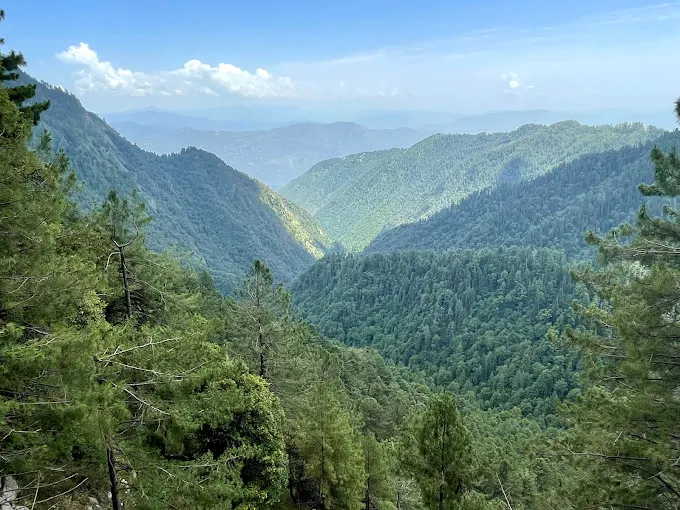
Ayubia National Park is a protected forest and wildlife reserve located in the Galyat range of northern Khyber Pakhtunkhwa. Established to conserve the region’s temperate forests and native wildlife, the park spans a chain of hill stations including Ayubia Gali and areas connecting Nathia Gali and Thandiani.
The park lies at elevations ranging roughly from 2,000 to 3,000 meters, which explains its cool climate and thick forest cover. Ayubia sits between well-known hill towns like Nathia Gali and Khanspur, forming a green corridor in the Galyat range.
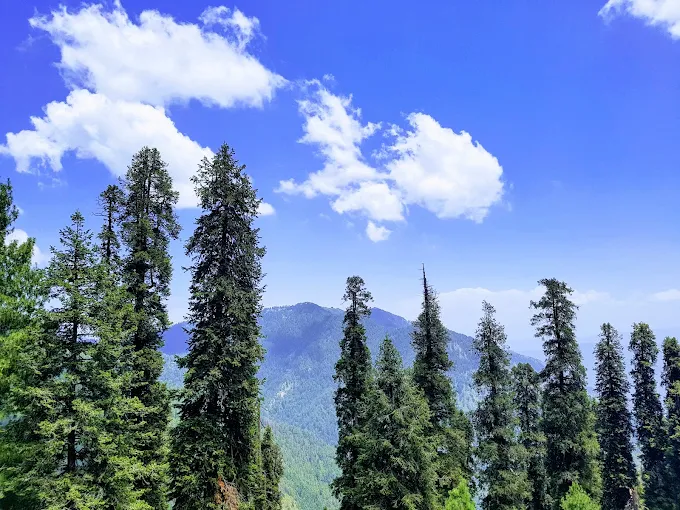
The forest here is dominated by pine, fir, and other mountain species. Mist and cloud cover are common, especially during monsoon months, giving the park its characteristic atmosphere.
Unlike destinations developed purely for tourism, Ayubia National Park exists first as a conservation area. Human activity here is regulated, and much of the park’s value lies in what remains undisturbed: dense forests, quiet trails, and ecological continuity across elevations.
For travelers, Ayubia offers a different experience from crowded hill towns. It is less about attractions and more about presence in a protected natural environment.
Ayubia National Park was formally designated to protect the Himalayan moist temperate forests that once covered much of the Galyat region. Over time, urban expansion and tourism pressure reduced forest cover in surrounding areas, making protected status necessary.
The park now serves multiple roles: ecological conservation, climate regulation, controlled recreation, and environmental education. Its management reflects a balance between allowing public access and preserving sensitive habitats.
This dual role makes Ayubia distinct from neighboring hill stations, which focus more on accommodation and leisure.
The main access area of the park, featuring walking paths, picnic zones, and entry points to forest trails. It is more structured than other sections.
A long, relatively level walking trail connecting Ayubia to Nathia Gali. It runs through forested areas and is popular for extended walks rather than hikes.
Certain trailheads connect to higher elevation paths. These routes are used mainly by experienced walkers and hikers.
From City | Approx. Distance | Route Overview |
Islamabad | ~90 km | Islamabad → Abbottabad → Ayubia |
Rawalpindi | ~95 km | Rawalpindi → Abbottabad |
Lahore | ~380 km | Lahore → Islamabad → Abbottabad |
Peshawar | ~250 km | Peshawar → Islamabad → Abbottabad |
Local Transport Notes
Public transport reaches Abbottabad, followed by local vans or taxis. Roads are paved but narrow, and fog is common during monsoon months.
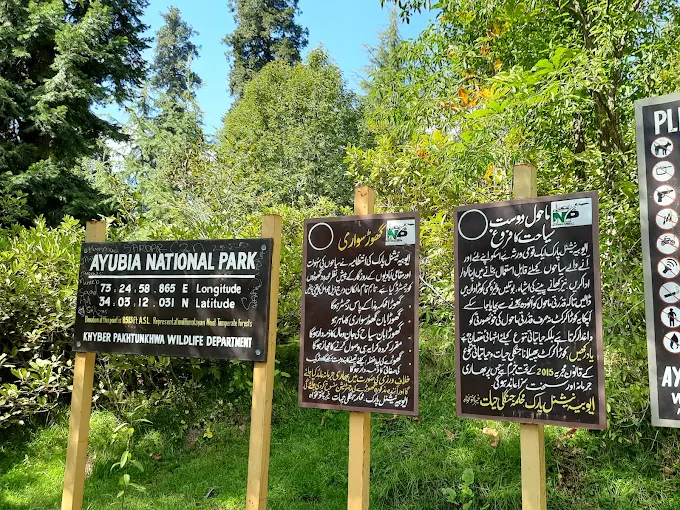
Ayubia National Park does have an entry ticket as it is a protected area.
Ticket rates may change, so visitors should confirm the current price at the entrance gate.
The best time to visit Ayubia National Park is from late spring to early autumn.
Accommodation options are mostly located outside the protected park area:
Hotels range from basic guesthouses to mid-range family hotels. Overnight stays inside forest zones are not permitted.
Ayubia National Park is best experienced through slow, low-impact activities that align with its protected status. Unlike commercial hill stations, activities here revolve around observation, walking, and time spent in nature rather than entertainment.
Walking is the primary way to explore Ayubia. The park offers a network of forest paths and maintained trails that are moderate in difficulty and suitable for regular walkers. The Pipeline Track, connecting Ayubia Gali to Nathia Gali, is especially popular for long, level walks through dense forest. These walks allow visitors to experience changes in vegetation, light, and temperature across short distances.
Ayubia’s forests are part of the Himalayan moist temperate ecosystem. Visitors often spend time observing tree diversity, forest layers, and seasonal changes rather than moving from point to point. The park encourages stillness and patience, which often leads to unexpected wildlife or bird sightings.
Ayubia National Park is known among nature enthusiasts for its birdlife. Species such as Himalayan bulbuls, flycatchers, woodpeckers, and other forest birds are commonly seen along quieter trails. Early mornings and less crowded paths offer the best chances for photography. Visitors frequently pause along trails to observe birds at close range, making photography a common and natural activity here.
For families, Ayubia offers designated picnic areas and short walking routes that do not require physical exertion. These areas provide safe outdoor exposure for children while keeping human activity contained and regulated.
Near park entry points and Ayubia Gali, small stalls sell basic items such as:
Shopping here is practical rather than tourist-oriented, reflecting local needs and seasonal travel patterns.
Ayubia National Park itself does not allow restaurants or food outlets inside protected forest zones. Visitors rely on nearby towns such as Ayubia Gali, Nathia Gali, and Dunga Gali for meals.
Food available around Ayubia is simple, warm, and familiar to most travelers:
Tea stalls are widespread and act as informal resting points for walkers and families. Food here is not a highlight of the destination, but it reliably meets basic needs after time spent outdoors.
The communities surrounding Ayubia National Park belong mainly to Hazara and Hindko-speaking populations. Their livelihoods are closely tied to forestry services, tourism support roles, small trade, and seasonal employment.
Social life follows a seasonal rhythm. During summer, increased visitor movement creates temporary economic activity. In winter, the area quiets down, and daily life returns to a slower pace. Hospitality is practical and respectful rather than overt or performative.
Ayubia does not host festivals or cultural events specific to the park itself. Cultural expression is subtle, reflected in daily routines, dress, and language rather than public celebrations.
Ayubia National Park was created primarily for conservation. It supports mammals such as monkeys, foxes, and small mountain species, along with a wide range of birds. The park also plays a role in protecting forest cover in the Galyat region, which helps regulate water flow and prevent soil erosion.
Wildlife sightings are more likely early in the morning or away from crowded paths.
Category | Species | Visibility |
Mammals | Rhesus monkey | Common |
Mammals | Red fox | Rare |
Birds | Himalayan bulbul | Common |
Birds | Woodpeckers | Common |
Category | Species |
Trees | Pine, cedar, fir |
Plants | Ferns, wildflowers |
Shrubs | Himalayan undergrowth |
Ayubia’s value lies in what is preserved, not what is built. Ayubia’s forests are sensitive to overuse. Visitors should avoid littering, stay on existing paths, and not disturb plants or animals. Fires should never be lit inside forest areas.
Protecting Ayubia National Park helps preserve one of the Galyat region’s most important natural spaces.