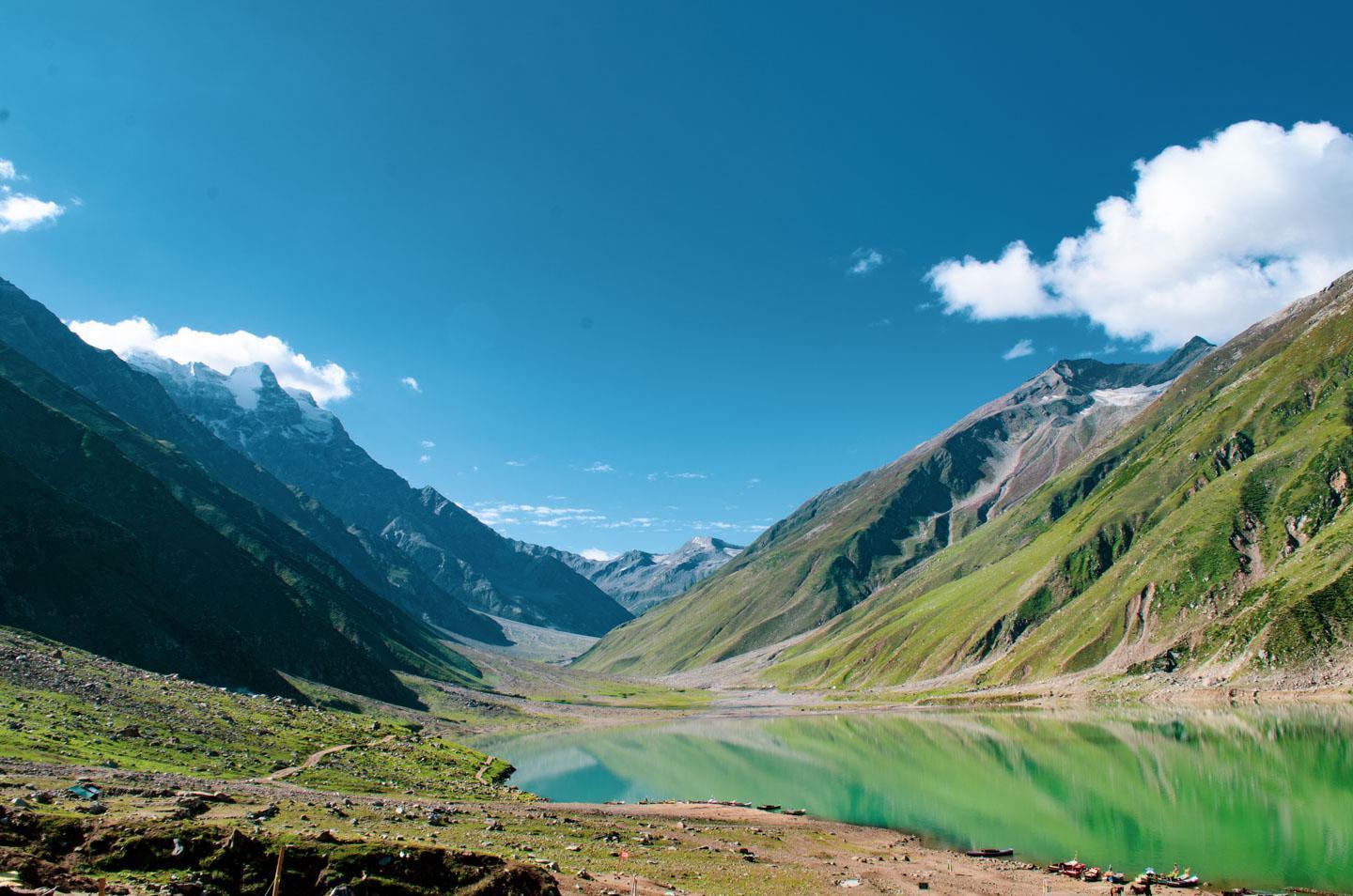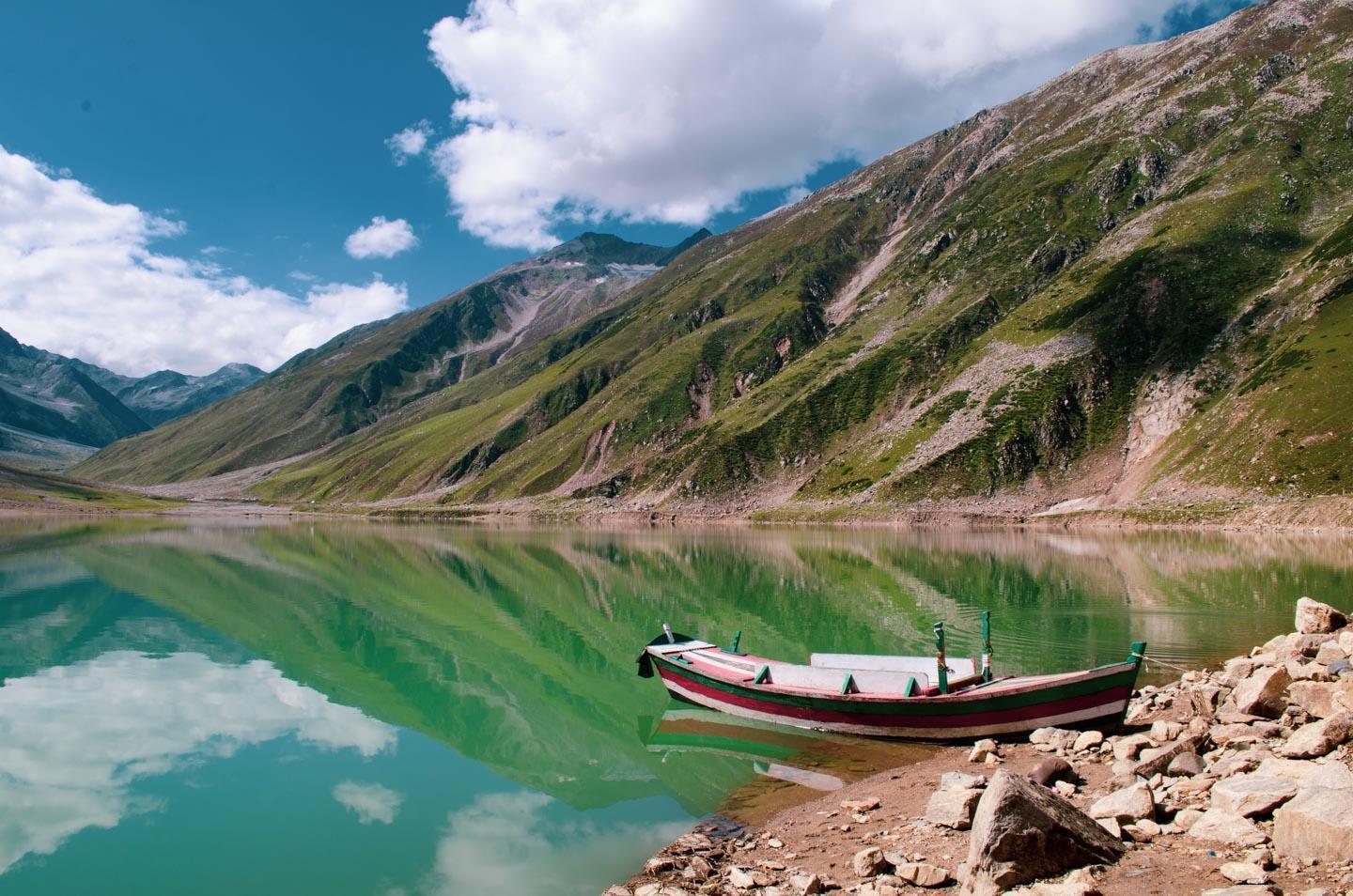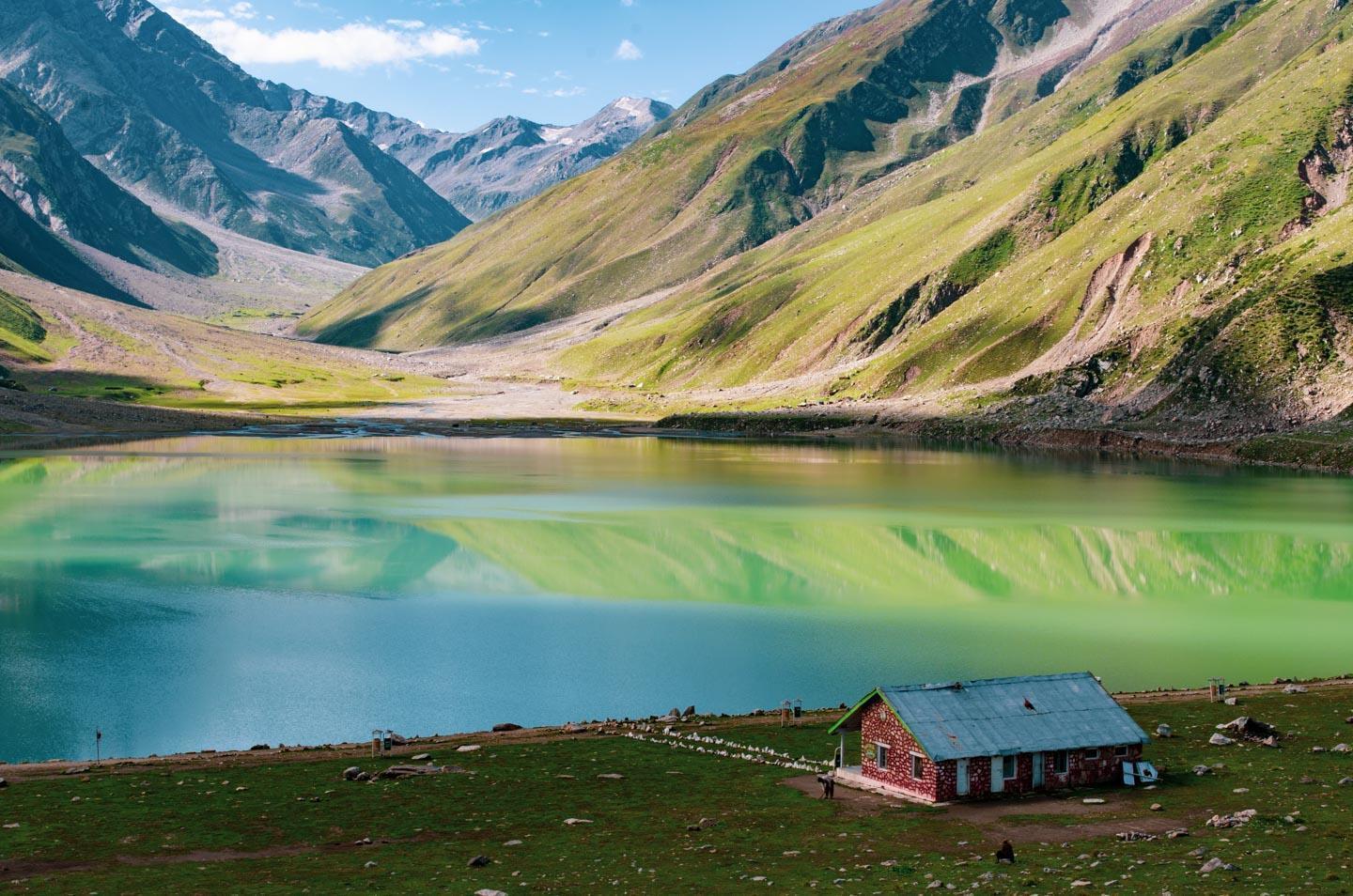
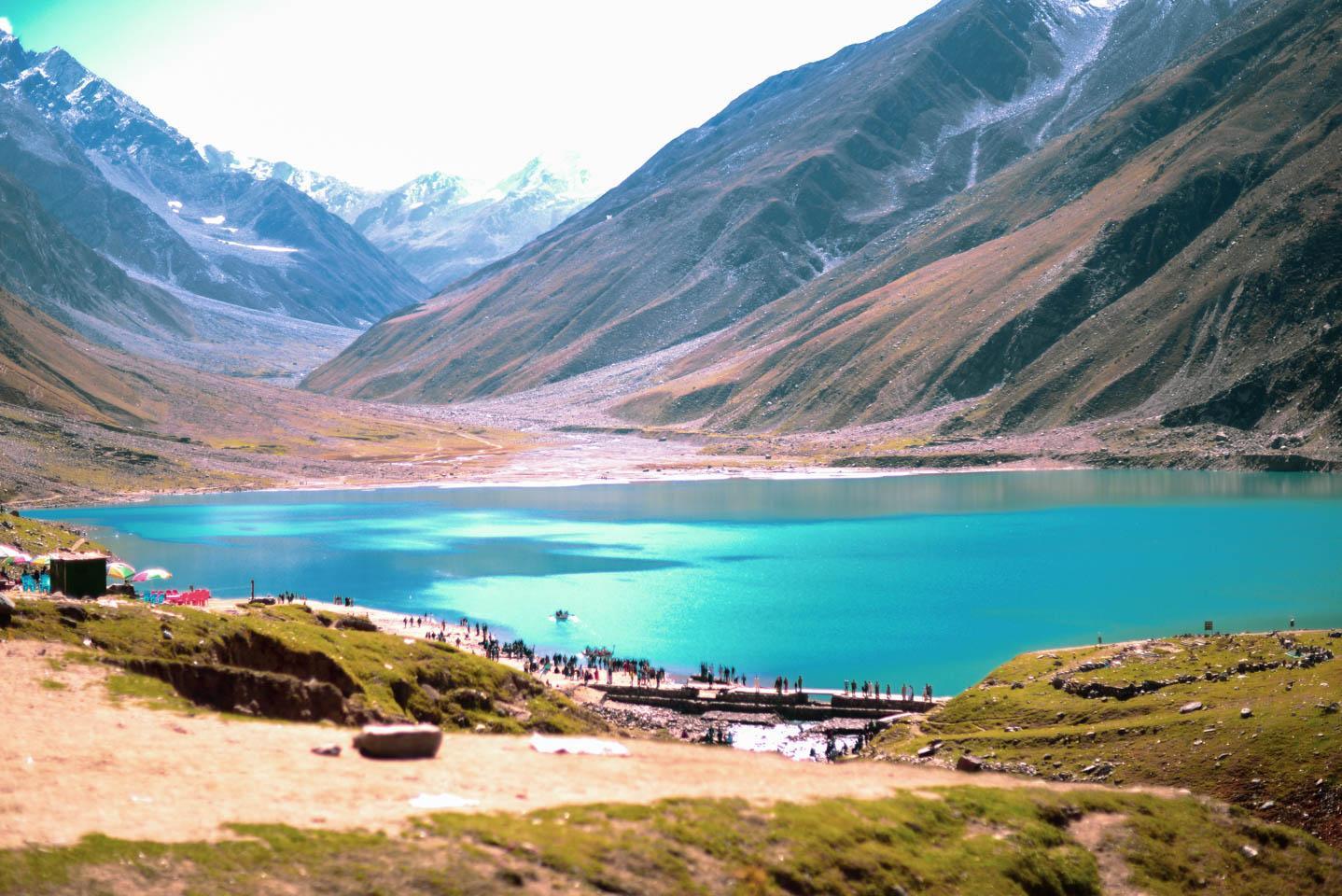
Saif ul Malook Lake is a high-altitude alpine lake located near Naran in the Kaghan Valley of Khyber Pakhtunkhwa, Pakistan. Situated at an elevation of over 3,200 meters, the lake is surrounded by steep mountain walls and fed by melting glaciers. Its clear water and dramatic setting make it one of the most visited natural sites in the region.
The lake is typically visited as a half-day trip from Naran. Due to its altitude, weather conditions can change quickly, and access depends heavily on seasonal road conditions. While the lake is widely photographed, its environment remains sensitive, requiring responsible travel behavior.
2. What to See
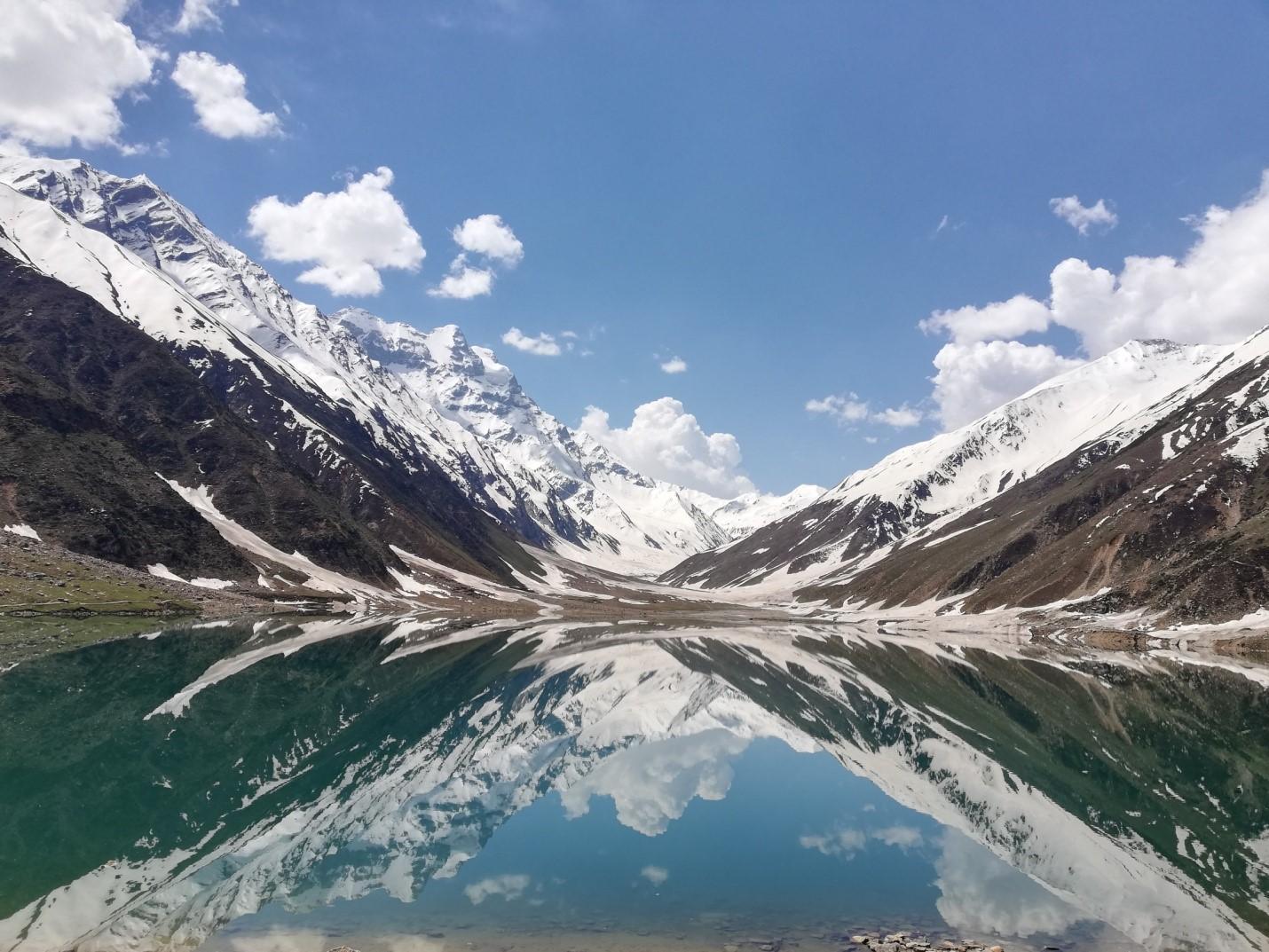
The lake is the main feature, with water that changes color with light and weather. On clear days, the surrounding peaks are reflected on the surface. Snow patches often remain visible around the lake even during summer.
The experience at Saif ul Malook Lake is shaped by its scale, altitude, and changing light rather than by a list of attractions. The lake sits in a natural bowl, surrounded by steep slopes that feel close and imposing, especially when clouds move in quickly.
What visitors typically see and do here includes:
- Walking the lakeside path, taking slow loops around accessible edges to experience different angles of the water and mountains
- Observing color changes in the lake, which shift from deep blue to green depending on sunlight, cloud cover, and time of day
- Photography focused on reflections, particularly in the early morning when winds are calmer and the surface is smoother
- Short rests on natural rocks, simply sitting and taking in the silence and thin mountain air
- Watching weather roll through, as fog, clouds, and light often change the scene within minutes
Unlike forest lakes or picnic areas, Saif ul Malook feels exposed and dramatic. Most visitors spend their time moving slowly, staying alert to weather shifts, and absorbing the surroundings rather than engaging in activities. The lake rewards patience more than movement.
Due to its altitude and exposed terrain, wildlife sightings around Saif ul Malook Lake are rare. The surrounding ecosystem mainly supports cold-water fish and alpine bird species, while plant life is limited to short grasses and mosses near the lake edges.
3. Entry Info
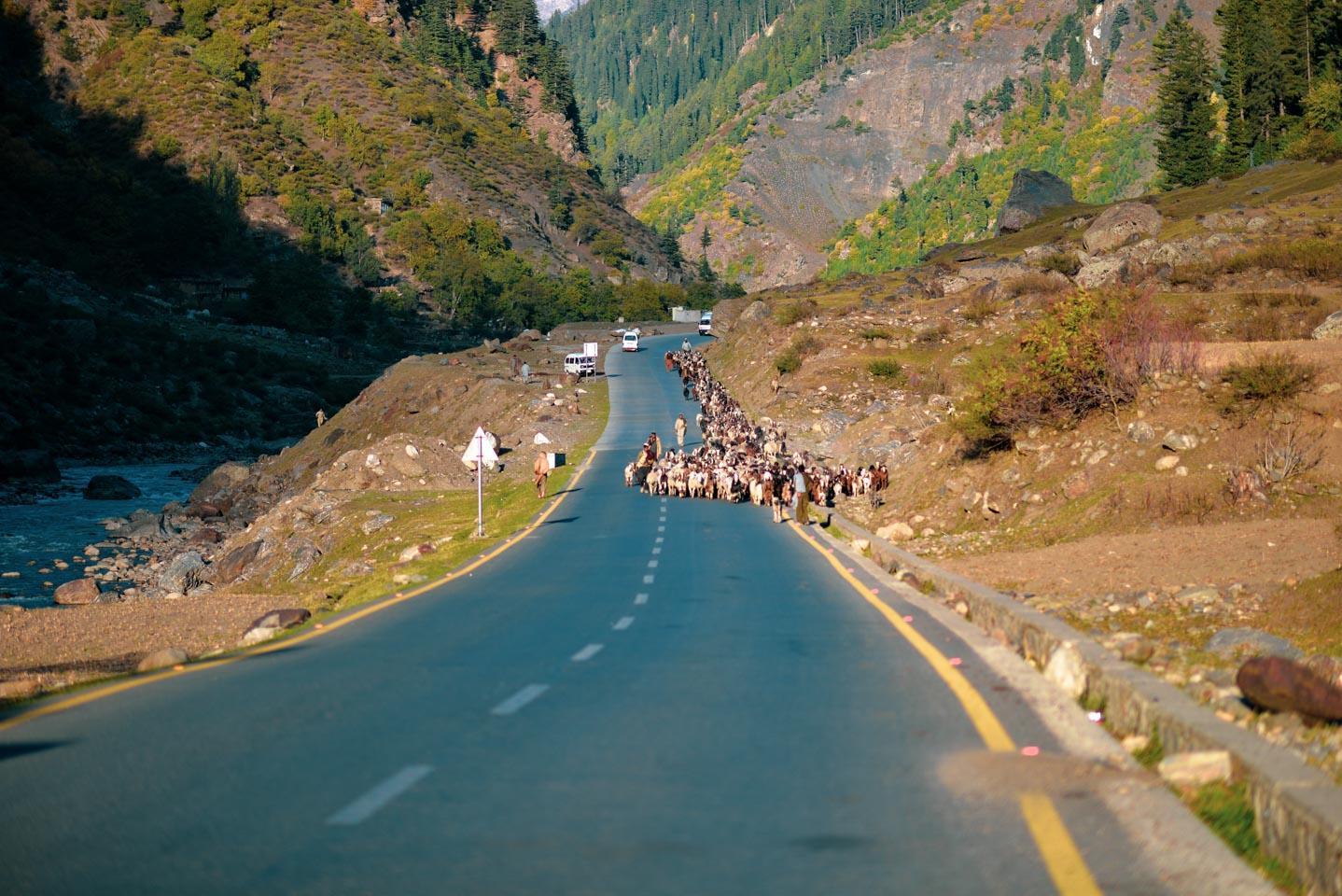
- Access point: Naran Valley
- Distance from Naran: Approximately 8.9 km
- Travel method: Jeep access is standard during the open season
- Hiking option: Possible for experienced walkers, depending on the weather
- Seasonal access: Typically late spring to early autumn
Road access may close due to rain, landslides, or early snowfall. Local confirmation is essential before departure.
4. Tips
- Visit early morning for clearer skies and fewer visitors
- Carry warm layers, even in summer
- Wear sturdy footwear suitable for rocky ground
- Avoid littering; waste management facilities are limited
- Do not disturb wildlife or walk beyond marked paths