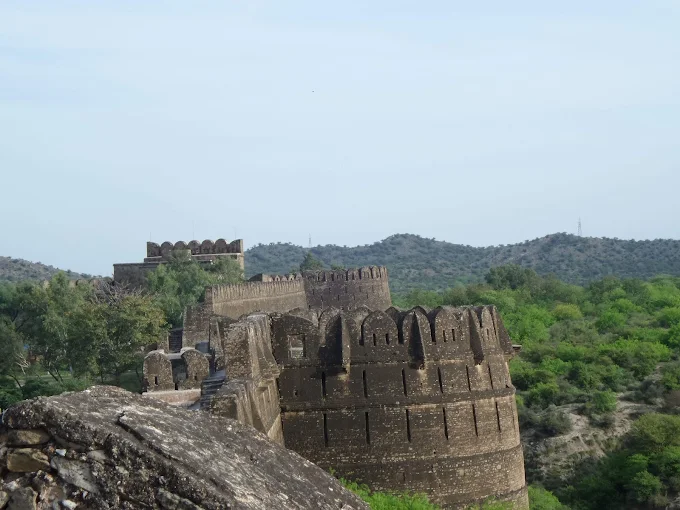
Rohtas Fort is not a gentle landmark. It stands, even today, as a statement of military might. Built in the 16th century by the Afghan ruler Sher Shah Suri, the fort was meant to do one thing: intimidate and contain. It was a strategic fortress designed to control the northern entrance routes into the plains of Punjab and prevent the return of the exiled Mughal emperor Humayun after Sher Shah had defeated him in battle.
Today, Rohtas Fort—also called Qila Rohtas—is internationally recognized as a UNESCO World Heritage Site and stands as one of the most formidable examples of military architecture in South and Central Asia.
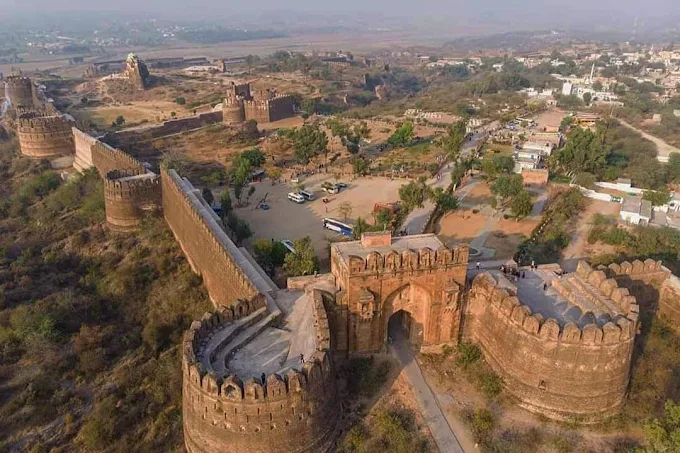
To appreciate Rohtas Fort, you must understand its context. Sher Shah Suri was a powerful general who temporarily displaced the Mughal emperor Humayun in the early 1500s. Though Humayun fled and sought refuge, Sher Shah was determined to prevent his return. That required not just armies, but fortresses of overwhelming scale.
Construction of Rohtas Fort began in 1541 under Sher Shah’s orders, supervised by his minister Todar Mal. The chosen location was strategic—near Jhelum, on high ground above the confluence of streams and close to what would become the historic Grand Trunk Road. Here, it would control and monitor troop movements into and out of the region.
The fort was also meant to subdue local tribes, particularly the Gakhars, who opposed Sher Shah’s authority and were potential allies of Humayun.
Rohtas Fort’s design reflects purpose: not comfort, beauty, or domesticity—but deterrence and dominance.
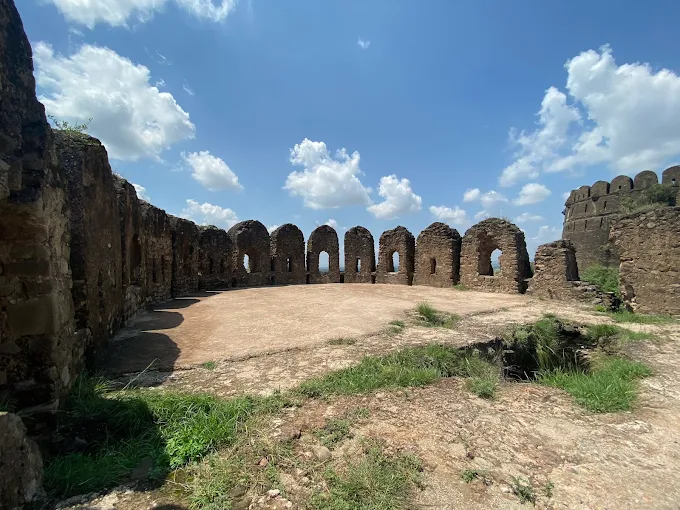
Rohtas Fort spans more than 4 kilometres in circumference, with high stone walls fortified with 68 bastions. Each bastion rises like a watchtower—intended to channel fear in any approaching force.
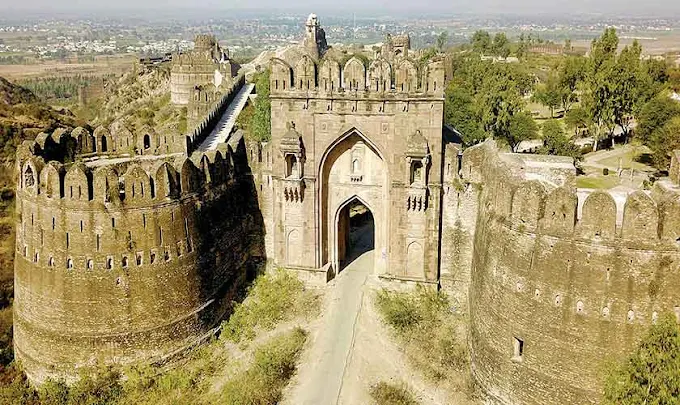
There are 12 monumental gates carved into these walls, each strategically positioned. These include iconic names such as Sohail Gate and Kabuli Gate. Massive and intimidating, these gates served as both a defense and a psychological barrier against invasion.
Deep inside is an inner fortified section (sometimes called Andarkot), separated from the main fort by another wall. This acted as the stronghold within the stronghold.
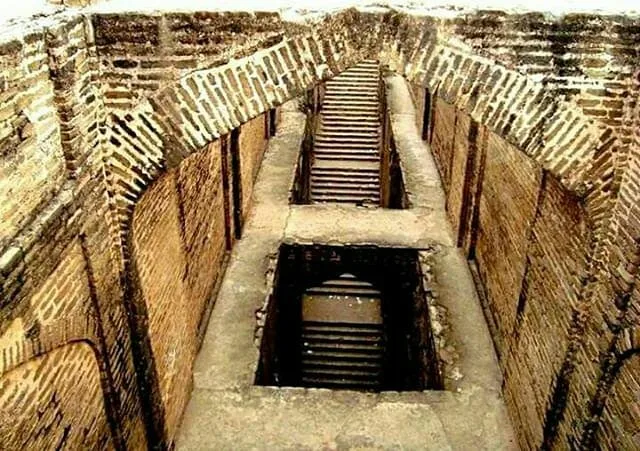
One of Rohtas Fort’s most practical and remarkable features is its baolis—stepped wells built to ensure an internal water supply during long sieges. These water structures show that the fort was designed to withstand not just external attacks but also internal isolation.
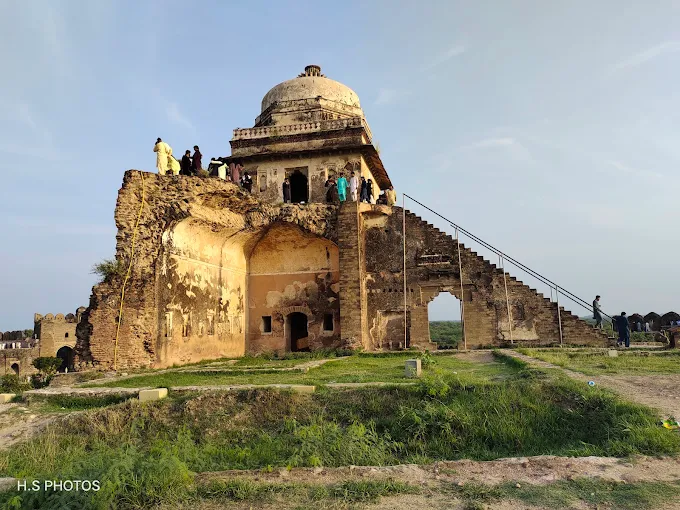
Within the sprawling walls are several buildings, including the Shahi Mosque near the Kabuli Gate, and the Haveli Man Singh, a palatial residence attributed to later rulers. These are smaller in scale but show how daily life intersected with military life here.
Rohtas Fort stands near the town of Dina, just northwest of Jhelum city in northern Punjab.
From | Approx. Distance | Approx. Travel Time |
Jhelum City | ~18 km | ~25–30 minutes |
Islamabad | ~145 km | ~2–2.5 hours |
Lahore | ~280 km | ~3.5–4 hours |
The fort lies off the old Grand Trunk Road, making it accessible by road from major cities in Punjab.
Note: Given the size and uneven terrain, visitors should wear comfortable walking shoes and allow 2–3 hours to explore significant areas.
The area around Rohtas Fort experiences a semi-arid climate typical of northern Punjab:
Water and shade are limited inside the fort, so planning your visit for cooler hours improves the experience.
Rohtas Fort is not a short, flat monument. It is a massive defensive structure built across uneven terrain.
For elderly visitors or those who may find long walking difficult, Rohtas Fort provides a paid caddy/cart service. This cart allows visitors to access the major gates, baolis, and central sections of the fort without walking the full distance. It is particularly helpful for families traveling with senior members.
Rohtas Fort was designed for endurance. Plan your visit accordingly.
Rohtas Fort was never fully tested in the siege warfare for which it was designed, yet its survival intact for nearly 500 years is itself a testament to its purpose. UNESCO describes it as an exceptional example of early Muslim military architecture in Central and South Asia, noting that its design influenced later developments in fortress construction across the subcontinent.
Some observers say that approaching the fort’s high walls today still evokes what Sher Shah intended—a psychological barrier as much as a physical one.